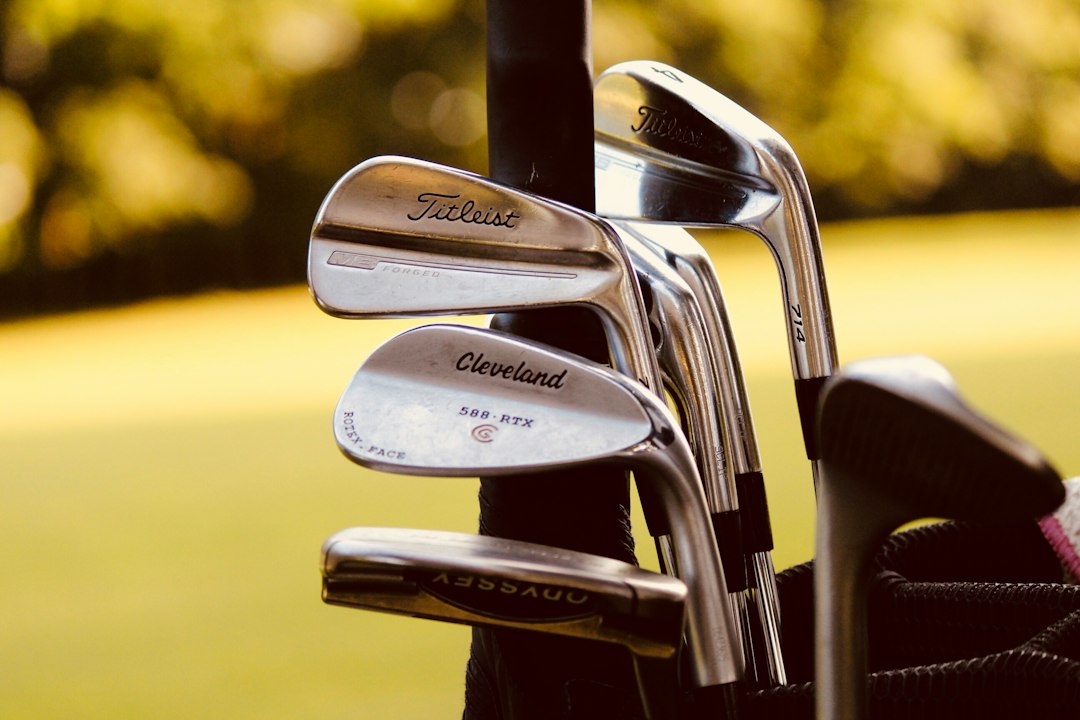
How Many Wedges Should a Beginner Carry
Most beginners should carry two wedges: the pitching wedge that came with their irons and a sand wedge. That pair covers almost every shot inside 100 yards without asking you to learn a third swing, and it leaves a free slot higher up the bag for a club that gets you off the tee. A gap wedge is the right third wedge once you know how far your pitching wedge actually carries.
Key takeaways
- 🔑 Two wedges is the right start for most beginners: your set pitching wedge plus a sand wedge.
- 🔑 Three is the sensible upgrade once you know your carry numbers, usually by adding a gap wedge.
- 🔑 The Rules of Golf allow 14 clubs, so an extra wedge costs you a club somewhere else in the bag.
- 🔑 Space the lofts 4 to 6 degrees apart and the yardage gaps stay even.
- 📚 Suggested reading: best irons for high handicappers
- 📚 Suggested reading: how to regrip golf clubs
The short answer: two wedges, then three
Two is the number to start with because a beginner bag almost always has one wedge in it already. Iron sets include a pitching wedge, so the only club you have to buy is a sand wedge. Between them you can play a full approach, a chip, a pitch and a bunker escape.
Three becomes worth the slot once you have measured your distances and found a gap you keep coming up short in. Shot Scope's on-course tracking, published by MyGolfSpy, shows that higher handicaps lean on their 56 and 60 degree wedges most, while lower handicaps spread the work more evenly across 50, 54 and 58 degree lofts. In plain terms, better players carry wedges that sit at even intervals, and beginners usually carry one club they trust and one they avoid.
Most amateurs carry between two and four wedges. Nothing says you need four. A lob wedge you cannot hit is a worse use of a slot than a hybrid you can.
What the 14-club rule has to do with your wedges
The Rules of Golf cap you at 14 clubs and the putter counts towards that number, as set out in Rule 4.1b on the R&A rule finder. There is no minimum, so 12 or 13 clubs is perfectly legal.
That limit is why the wedge question is a trade rather than a purchase. A typical beginner bag runs a driver, a fairway wood, a hybrid, six or seven irons, a pitching wedge, a sand wedge and a putter. If you never hit your longest iron, a gap wedge is the better use of that slot. If you struggle off the tee, keep the hybrid and stay at two wedges. Our guide to drivers for beginners covers the top end of that decision.
Space the lofts and the gaps look after themselves
Start by finding your pitching wedge loft. It is stamped on the sole of most clubs and listed in the specs of anything sold in the last few years. Strong-lofted game improvement sets often sit at 43 to 45 degrees, while older or players-style sets sit nearer 46 or 47.
From there the rule of thumb is a 4 to 6 degree step between wedges, which usually works out at 10 to 15 yards of carry. A pitching wedge at 44 degrees pairs neatly with a 50 degree gap wedge and a 56 degree sand wedge, two six degree steps. A 46 degree pitching wedge is better matched with 52 and 58.
Do not guess the yardages. Hit ten shots with each wedge on a launch monitor or at a range with measured flags, keep the middle figure, and write the three numbers on a note in your bag. The average matters, not your best strike. If your wedges have gone slick, a fresh set of grips changes the feel more than new heads do, and our regripping guide covers the job.
Two beginner bags that work
The two-wedge bag. Pitching wedge plus a 56 degree sand wedge, with a 5 hybrid or a 4 iron in the slot you saved. This suits anyone still finding their swing, because there are fewer clubs to choose between inside 100 yards.
The three-wedge bag. Pitching wedge, a 50 degree gap wedge and a 56 degree sand wedge, with the longest iron left out. This suits a golfer who plays most weeks and has measured the gap between pitching and sand wedge.
One detail worth knowing before you buy is bounce, the angle between the sole and the leading edge. A sand wedge with 10 to 12 degrees of bounce suits the softer turf of most UK parkland courses. If you play a firm links course, a lower bounce sole slides through the turf rather than digging in.
UK wedges worth buying
Nine options, from a single wedge under £30 to a matched set. Prices are the live Amazon UK listings at the time of writing.
- Ram Golf Pro Spin 3 Wedge Set (52, 56 and 60 degrees) - £59.99, the simplest way to try a three-wedge setup.
- Mile High Life Entry Level Wedge Set (52 degrees) - £34.99, the cheapest route into a matching wedge.
- Gowolf Golf Wedges 52, 56 and 60 Set (forged) - £111.97, forged heads with a full-face groove pattern, which is the shape that keeps a little spin on a strike caught off the toe..
- MacGregor MT Tourney 3 Wedge Set - £129.99, a traditional-looking set from a name that has been making clubs for a century.
- Kirkland Signature 3 Piece Wedge Set - £198.29, the premium set, and the one to choose if you would rather buy once.
- Ben Sayers XF Pro 52 Degree Wedge - £24.95, the cheapest way to test whether a gap wedge helps you.
- Ben Sayers XF Pro 56 Degree Wedge - £25.99, a straightforward sand wedge for a beginner bag.
- Longridge Tour Spin 60 Degree Wedge - £29.36, only worth adding once you can hit your sand wedge well.
- Cleveland RTX 6 ZipCore 52 Degree Wedge (mid bounce) - £119.17, the premium single wedge here.
1. Ram Golf Pro Spin 3 Wedge Set (52, 56 and 60 degrees)
The simplest way to try a three-wedge setup. You get a 52, 56 and 60 degree wedge in one box for less than most single premium wedges, which makes it the pick if you do not yet know where your gaps fall. Currently £59.99 on Amazon UK. Check the current price.
2. Mile High Life Entry Level Wedge Set (52 degrees)
The cheapest route into a matching wedge. The 52 degree head is the one to add first if your pitching wedge stops well short of your sand wedge. Currently £34.99 on Amazon UK. Check the current price.
3. Gowolf Golf Wedges 52, 56 and 60 Set (forged)
Forged heads with a full-face groove pattern, which is the shape that keeps a little spin on a strike caught off the toe. Currently £111.97 on Amazon UK. Check the current price.
4. MacGregor MT Tourney 3 Wedge Set
A traditional-looking set from a name that has been making clubs for a century. The 52, 56 and 60 degree lofts suit a standard pitching wedge. Currently £129.99 on Amazon UK. Check the current price.
5. Kirkland Signature 3 Piece Wedge Set
The premium set, and the one to choose if you would rather buy once. Three matched wedges with the same shaft and grip, so the feel carries from one club to the next. Currently £198.29 on Amazon UK. Check the current price.
6. Ben Sayers XF Pro 52 Degree Wedge
The cheapest way to test whether a gap wedge helps you. At under £25 you can carry one for a season and see whether the shots between your pitching and sand wedge get closer. Currently £24.95 on Amazon UK. Check the current price.
7. Ben Sayers XF Pro 56 Degree Wedge
A straightforward sand wedge for a beginner bag. The 56 degree loft with a wide sole is the combination most parkland players want from a bunker. Currently £25.99 on Amazon UK. Check the current price.
8. Longridge Tour Spin 60 Degree Wedge
Only worth adding once you can hit your sand wedge well. The 60 degree loft asks for a committed swing, and a thin strike with this club runs a long way past the green. Currently £29.36 on Amazon UK. Check the current price.
9. Cleveland RTX 6 ZipCore 52 Degree Wedge (mid bounce)
The premium single wedge here. Cleveland wedges turn up in a lot of better players' bags, and the mid bounce sole suits the softer turf of a UK parkland course. Currently £119.17 on Amazon UK. Check the current price.
Frequently asked questions
How many wedges should a beginner carry?
Two, to begin with: the pitching wedge that came with your irons and a sand wedge. Add a gap wedge once you have measured how far each one carries and found a gap you keep coming up short in.
Do I need a gap wedge as a beginner?
Only if there is a real gap to fill. Hit ten shots with your pitching wedge and ten with your sand wedge. If the difference is more than about 15 yards, a gap wedge at the loft in the middle earns its slot.
Should a beginner carry a 60 degree lob wedge?
Not at first. The 60 degree loft needs a committed swing, and a thin strike sends the ball a long way past the green. Get comfortable with a sand wedge before you add one.
What loft sand wedge should a beginner use?
54 to 56 degrees with 10 to 12 degrees of bounce is the usual starting point for UK parkland courses, because the bounce keeps the sole from digging into softer turf.
Do wedges come with a set of irons?
A set normally includes the pitching wedge and sometimes a gap wedge. Sand wedges and lob wedges are almost always sold separately, which is why most beginners only have one wedge when they start.
How often should I replace my wedges?
Grooves wear with use. A common guide is to look at new wedges every 60 to 100 rounds, or sooner if the face has gone shiny and the ball stops checking on the green.
The verdict
Start with two wedges: whatever pitching wedge came with your irons plus a sand wedge at 54 or 56 degrees. Measure your carry distances over a few rounds, and if the gap between them is wider than 15 yards, add a gap wedge at the loft that splits the difference. Buy one club at a time. A £25 wedge that fills a real gap beats a £130 club you never learned to hit.
If you are still building the rest of the bag, our beginner golf ball guide covers the other half of the short game.

Tom compares golf gear for WeekendGolfer - balls, clubs, bags and gadgets. He plays off 14 at a municipal course and says when the cheaper option does the same job.
As an Amazon Associate we earn from qualifying purchases.
Last reviewed: October 1, 2026 · Evidence-based content · Contains affiliate links