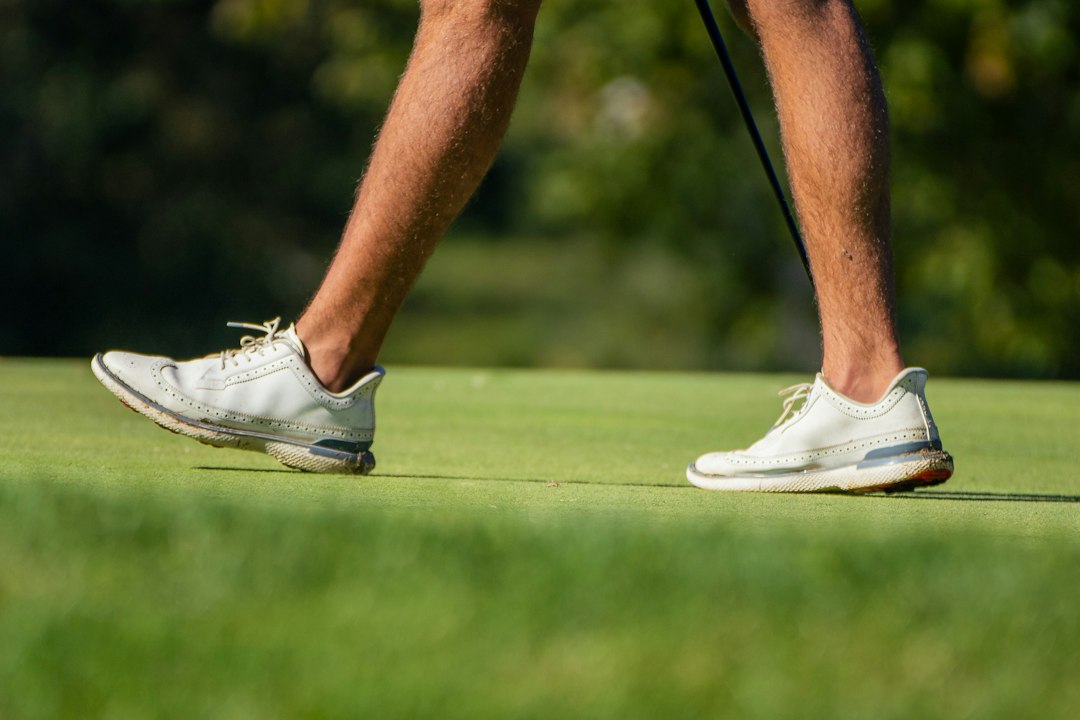
Are Golf Shoes Important?
Golf shoes will not add a single yard to your drives, and anyone who says otherwise is selling something. What they do is stop your feet sliding when the fairway is wet, keep your feet dry through four hours of British weather, and take some of the sting out of the walk.
If you play a real course more than a handful of times a year, they are worth buying. If your golf is a dry nine holes at the pitch and putt, trainers will do the job. Anyone playing through the winter should start with a spiked pair such as the adidas Tour360 24, because cleats bite into soft ground where a moulded sole slides.
- Grip is the real job. A study of 24 golfers on natural grass measured the load under the feet at up to 1.1 times body weight on the front foot with an iron, and the friction between shoe and turf stayed at 0.62 whichever design was worn.
- They will not make you longer. No study links a golf shoe to clubhead speed or distance, so treat any claim that one adds yards with suspicion.
- Waterproofing beats the badge. In the UK a membrane and a written one-year waterproof warranty matter more than which tour player wears them.
- Fit and width decide comfort. Wide feet should start with a wide last, and sizes shift between brands, so read the listing chart rather than assuming your usual size.
🔑 See all WeekendGolfer guides · 📚 Best golf shoes UK, spiked or spikeless
What golf shoes actually do
The best evidence comes from turf studies rather than marketing copy. In one trial, 24 golfers hit a driver, a 3 iron and a 7 iron in three different shoes: traditional metal spikes, alternative spikes and a flat sole with no added traction (Journal of Sports Science and Medicine, 2007). Force platforms under natural grass measured the load going through each foot.
The numbers are larger than most golfers expect. With the irons, the maximum vertical force reached about 0.82 of body weight at the back foot and about 1.1 of body weight at the front foot. With the driver those figures dropped to roughly 0.49 and 0.84. More load moves through your lead foot as you swing, and it grows with the shorter, steeper clubs.
What stayed the same is just as interesting. The coefficient of friction between the shoe and the grass came out at 0.62 at both feet whichever shoe was worn and whichever club was used. That suggests the sideways grip on grass does not vary much between sole designs, even though grip is how shoes get sold. A second study of 18 right-handed golfers using a driver found no significant difference in front-foot force or torque between the three designs, though the metal-spiked shoe did produce more torque at the back foot than a flat sole (Kinetic Assessment of Golf Shoe Outer Sole Design Features).
What golf shoes do not do
A shoe cannot fix a swing. It will not straighten a slice, add clubhead speed or stand in for a lesson, and no credible measurement ties a sole design to extra distance. If you are spraying the ball around, your money goes further on practice than on footwear.
What a shoe does is remove two problems that quietly cost shots: feet that move when you want them planted, and feet that are cold and wet by the fourteenth hole. Both show up in the last hour, which is where most weekend scores leak away. Grip works the same way elsewhere in the bag, and a worn glove costs you more than a worn sole, as our guide to what a golf glove does for your grip explains.
When trainers are genuinely fine
Plenty of golf gets played in trainers, and on a dry summer day nobody minds. A flat pitch and putt, a quick nine after work, a course where you spend most of the round on paths: trainers cope, and some spikeless shoes are barely different from a trainer anyway.
The trade-offs are real, though. Wet slopes get slippery, mesh soaks through by the third hole, and plenty of UK clubs ask for proper golf shoes as part of their dress code, so check before you turn up in running shoes.
Spiked, spikeless or a winter shoe?
Spiked shoes carry soft plastic cleats you can replace, and they hold best on soft ground from autumn onwards. A spiked pair suits anyone who plays through the winter and fights for footing in the wet.
Spikeless shoes use a moulded rubber sole with small lugs. They are lighter, quieter and comfortable enough to drive home in, and grip is fine on firm summer turf. You give up a little on steep, wet ground.
Winter is a waterproofing question rather than a sole question. Look for a named membrane and a written one-year waterproof warranty. The Callaway GTX, the PUMA Electrocat and the Under Armour Drive Fade all carry one. If you would rather roll than carry in the wet, our guide to budget electric golf trolleys covers the other half of a winter round.
What the rules say about spikes
The Rules of Golf do not ban metal spikes outright. What they allow is for a competition committee to prohibit certain types of shoe, and that is what happened at most UK clubs years ago (The R&A rules of golf). Soft spikes and spikeless soles are what you will see almost everywhere, and metal spikes will be turned away at the vast majority of courses because of the damage they do to greens.
Shoes worth buying at each price
These are the live Amazon UK prices at the time of writing, and they move, so treat them as a guide. All nine pairs were in stock when the prices were checked.
FitVille Extra Wide Spiked, about £55.99. This one is widest fit here, so the pick for a broad foot that gets pinched in a standard last.
adidas SW5540 Spikeless, about £58.32. This one is the cheapest proper spikeless shoe on this list and an easy first pair.
PUMA Electrocat Waterproof Spikeless, about £59.95. This one is a waterproof membrane at a mid price, which is what a UK winter asks for.
Callaway GTX Waterproof Spikeless, about £69.29. This one is one year waterproof warranty and a sole that suits firm summer turf.
adidas Tour360 24 Spiked, about £84.95. This one is replaceable soft cleats that bite into soft ground from October onwards.
Skechers GO Golf Tempo GF, about £89.99. This one is the comfort pick, with a trainer-like fit for a long walk.
FootJoy FJ Tour Rival, about £100.00. This one is a well known last and a solid all-rounder if you want one pair for everything.
Under Armour Drive Fade Spikeless, about £107.15. This one is waterproof upper and a light sole, good when you walk most rounds.
FootJoy FJ Traditions, about £130.00. This one is full leather and the most traditional shape of the nine, and the priciest.
Frequently asked questions
Are golf shoes really necessary?
They are necessary for comfort and for grip on wet ground rather than for distance. If you play through a British autumn and winter, waterproof shoes with a proper sole keep your feet dry and stop you sliding on soft slopes. On a dry pitch and putt in July, trainers are fine.
Do golf shoes make you play better?
Studies of shoe design have not found a link between sole type and clubhead speed, so do not expect lower scores from a new pair. What they do fix is slipping feet and cold, wet feet, and both of those cost shots late in a round.
Can I wear trainers on a golf course?
On many courses you can, and nobody will say anything on a dry day. Two things to check first: whether the club asks for golf shoes as part of its dress code, and whether the forecast is wet, because a mesh trainer soaks through in minutes.
Are spiked shoes better than spikeless ones?
Spiked shoes hold better on soft, wet ground, which is why they suit winter. Spikeless shoes are lighter and more comfortable and cope with firm summer turf. If you play all year, spiked or a waterproof spikeless pair covers more of the season.
How often should I replace golf shoes?
Watch the waterproofing rather than the calendar. Once water gets in through a tired membrane, no amount of polish brings it back. Replaceable soft spikes are cheap to swap, so a worn spike is not a reason to replace the whole shoe.
What should I look for in waterproof golf shoes?
A named membrane and a written waterproof warranty, usually one year. That written promise is the part that separates a genuinely waterproof shoe from one that has been sprayed and called water resistant.

Priya covers rangefinders, shoes and training aids for WeekendGolfer, focusing on what helps a weekend golfer rather than tour-level gear.
As an Amazon Associate we earn from qualifying purchases.
Last reviewed: September 30, 2026 · Evidence-based content · Contains affiliate links